
PRWCA Wine Remediation Tasting Report
Wine Remediation Technology Focused on Value Recovery
Many existing techniques used to manage wine faults and taints either remove more than intended or rely on masking undesirable characters. Both approaches can compromise balance and reduce overall wine quality.
To address this, amaea developed its molecularly imprinted polymer (MIP) technology — a highly selective remediation approach designed to target and remove specific unwanted compounds while preserving desirable wine components. By selectively removing undesired molecules, amaea MIPs help to reveal fruit expression, enhance aroma, and restore balance, supporting the recovery of wine quality and value.
In partnership with the Paso Robles Wine Country Alliance, winemakers participated in a guided tasting to evaluate wines from a local winery affected by pyrazine and smoke taint, both before and after treatment using amaea’s MIP solution.
The tasting revealed the following key outcomes:
Improved fruit flavor and aromatic expression
Reduction in off-aromas and relevant taints
Decreased astringency and bitterness
Overall lift in perceived quality and wine usability
Results
Wine A: 2023 Paso Robles Cabernet Sauvignon (pyrazine impacted)
Treatment Parameters
Applied dose rate: 8 g/L
Applied flow rate: 100 CV/hr
40% of total volume recirculated
Treated using amaea RMx
Sensory Results
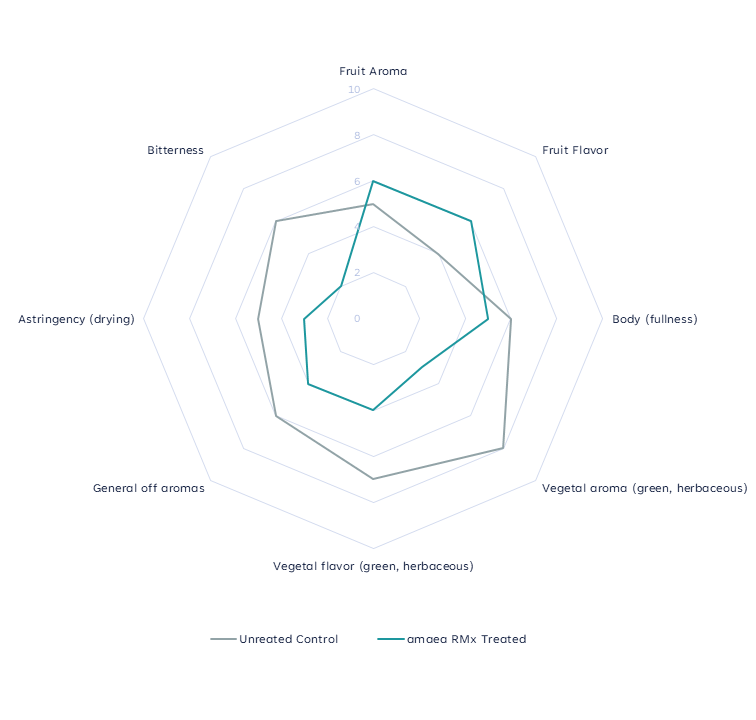
Fruit aroma and flavor improved
Vegetal characters reduced
Off aromas, astringency and bitterness reduced
Analytical Results
The tasting results indicated that the untreated control was only lightly impacted by pyrazines.
However, removing just 4.4% of IBMP was sufficient to noticeably reduce vegetal aromas and flavor.
This small, targeted adjustment resulted in a clear lift in overall wine quality, allowing fruit expression to naturally come forward.
| Sample | IBMP Concentration |
|---|---|
| Untreated Control | 20.4 µg/L |
| amaea RMx Treated | 19.5 µg/L |
| Removal | 4.4% |
IBMP Concentration
Wine B: 2020 Paso Robles Cabernet Sauvignon (smoke impacted)
Treatment Parameters
Applied dose rate: 15 g/L
Applied flow rate: 100 CV/hr
Treated using amaea VPx
Sensory Results
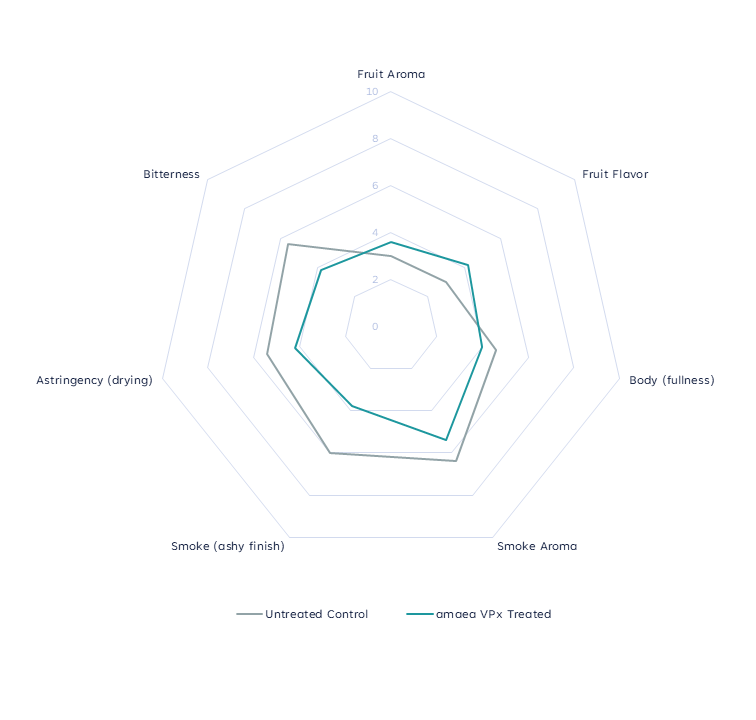
Fruit aroma and flavor improved
Smoke impacts reduced
Astringency and bitterness reduced
Analytical Results
Smoke marker compounds were reduced by up to 14% following treatment with amaea VPx. In line with sensory feedback, these results demonstrate selective removal of smoke-related compounds without stripping desirable wine attributes, resulting in a cleaner, more balanced, and more usable wine.
| Sample | guaiacol | 4-methylguaiacol |
|---|---|---|
| Untreated Control | 8.8 µg/L | 4.4 µg/L |
| amaea VPx Treated | 7.7 µg/L | 3.8 µg/L |
| Removal | 12.5% | 13.6% |
Smoke marker compounds (µg/L)
About amaea
amaea is a world-leading innovator in molecular filtration, empowering winemakers to remove unwanted molecules caused by climate and environmental challenges.
amaea’s reusable molecularly imprinted polymer (MIP) technology is custom-engineered to selectively capture target molecules from wine at scale. This allows winemakers to tailor the sensory profile of their products using a low-impact production solution.
amaea’s MIP technology is already in commercial use across the wine industry in the United States, Canada and New Zealand, where the company is headquartered. Additional beverage applications are currently in development.