

amaea RMx for remediating pyrazine in wine
Targeted remediation for pyrazine in wine.
Overcome a challenging harvest with amaea RMx, a first-of-its-kind solution designed to help alleviate green aromas in wine. Our filtration solution selectively targets methoxypyrazines at the molecular level, reducing vegetal characters while preserving the characteristics that define your wine.
Restore commercial value without compromise.
What are pyrazines in wine?
Managing green aromas in the winery
What are pyrazines in wine? Pyrazines are a class of compounds responsible for the “green” and “vegetal” aromas found in wines, with IBMP (isobutyl methoxypyrazine) identified as a prominent pyrazine that is associated with immature grapes and is used as the analytical marker.
At low concentrations, pyrazines can be considered a regional or varietal hallmark; but when present at higher sensory thresholds, i.e., 2-5 ppt (ng/L), the concentration can create significant sensory challenges for winemakers—similar to issues such as smoke taint in wine from wildfire exposure.
By blending or using advanced winemaking techniques, winemakers can shift the sensory profile to mask the undesired aromas. However, these techniques often detract from other desirable features of the wine.
Targeted remediation focused on quality improvement
amaea has developed amaea RMx, an innovative molecular filtration pyrazine wine fix designed to selectively target and capture the pyrazines responsible for the green aromas found in wines. By capturing molecules, such as IBMP, amaea molecularly imprinted polymers (MIPs) reduce the offending green aromas, revealing more of the varietal character of the wine.
By using amaea RMx, winemakers are able to:
Reduce pyrazine concentration.
Adjust treatment rates to customize sensory outcomes.
Enhance the quality of their wine.
What’s happening in the wine?
Laboratory analysis of Cabernet Sauvignon wines treated using amaea RMx showed the concentration of IBMP (the analytical marker used for pyrazines) was reduced by up to 23%.
IBMP analysis of amaea RMx treated Cabernet Sauvignon
How did it taste?
Sensory feedback from 81 winemakers on a 2022 Cabernet Sauvignon treated with amaea RMx reflected a reduction in green, vegetal, and astringent notes, resulting in the wine becoming more fruit-forward.

Low-impact production process using regenerable polymers
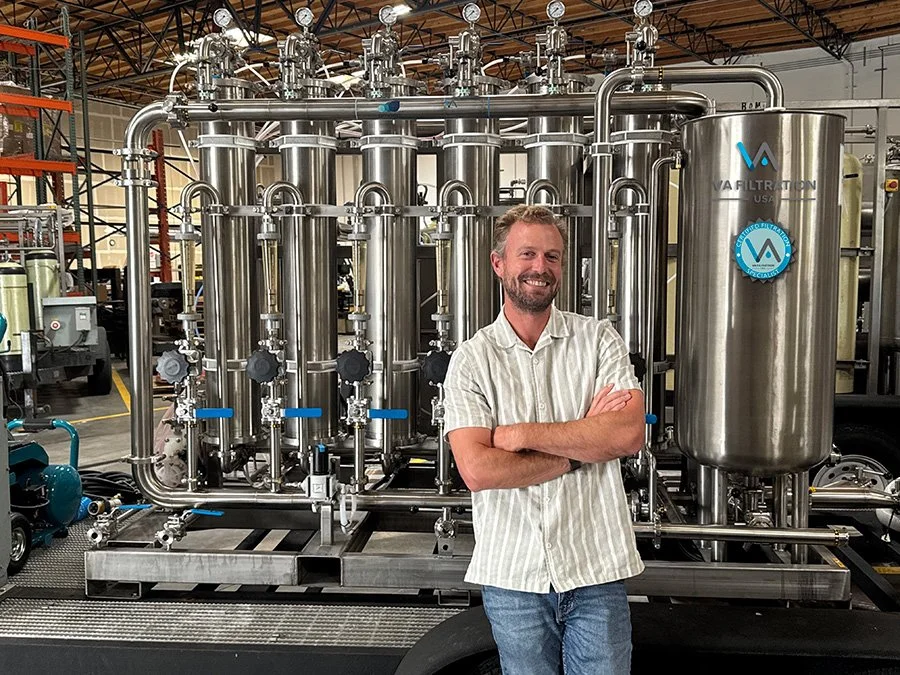
To remove pyrazine in wine, amaea RMx uses a single-pass, low-pressure filtration system that is easy to implement and quick to administer. As the wine passes through the columns, the pyrazine molecules bind to amaea MIPs. Once saturated, the amaea MIPs are regenerated using an eluent, making them ready for reuse.
The result is a more sustainable, low-impact process built for precision and value recovery—a method that can be adapted for various remediation needs, including rose wine taint solution applications.
FEATURED PYRAZINE WINE FIX CASE STUDY
Selective Pyrazine Remediation Advances Napa Valley Cabernet Sauvignon Up a Tier
A wine held back by pronounced green notes, Sonoma Bespoke adopted amaea RMx to selectively remove the offending pyrazines to reveal the varietal’s natural ripe fruit character. The treatment was completed on-site in under two days, and real-time tasting enabled winemaker, Joe Uhr to stop the process the moment the wine hit his stylistic target with the resulting wine advancing up a price tier.
Our service provider partners
We are proud to work alongside valued and trusted service providers to provide our molecular filtration services for you.
-

VA Filtration
VA Filtration is USA’s leading filtration technology experts with 18 years of experience in the wine industry.
-

Cellar Dweller
Based in Okanagan Falls, B.C., Cellar Dweller have been providing mobile filtration services for Pacific North West wineries for over a decade.
-

Vintech Pacific
Vintech Pacific is a New Zealand owned and operated company, providing a range of innovative technology processes to the wine industry.
-

Winesecrets
Since 2003 Winesecrets have been providing America’s wine producers with separation technologies that improve efficiency, eco-performance and wine quality, with unparalleled service, expertise and dedication.
Frequently asked questions about pyrazine
-
Certain grape varieties naturally contain higher concentrations of pyrazines, making them more susceptible to pronounced vegetal characters when growing conditions aren’t ideal. The most commonly associated varieties are:
Cabernet Sauvignon
Sauvignon Blanc
Merlot
Carménère
While these varieties have a genetic predisposition to higher levels of pyrazine in wines, environmental factors such as underripe fruit, excessive canopy shade, and climate volatility also play a significant role in determining final concentrations.
-
Ripeness directly impacts pyrazine levels. Pyrazine concentrations are higher in immature grapes and naturally decline as grapes progress through véraison and achieve physiological ripeness.
IBMP levels in Cabernet Sauvignon and Merlot can decrease by 70-90% between véraison and full ripeness. Grapes harvested before reaching optimal maturity retain higher pyrazine concentrations that translate into pronounced vegetal characters.
When challenging conditions, such as frost or shortened growing seasons, force early harvest, a selective molecular pyrazine wine fix helps manage pyrazine levels while preserving wine quality.
-
Not always. Understanding what pyrazines are in wine helps winemakers recognize when these compounds contribute to desirable character versus becoming a sensory defect.
Low pyrazine levels can add herbaceous complexity and regional character. In Sauvignon Blanc, for example, grassy and capsicum notes are typically seen as stylistic hallmarks of the variety.
But when present in higher concentrations, pyrazines shift from nuanced complexity to dominant characters that mask fruit expression and diminish wine quality, much like how Brettanomyces in wine smells can overwhelm a wine’s intended profile.
Contact our team and book a trial today
Your wine deserves precision remediation. Whether managing elevated IBMP from young fruit or challenging vintage conditions, amaea RMx delivers a selective pyrazine wine fix that protects quality and recovers commercial value.
Working with winemakers across New Zealand, the United States, and Canada, amaea RMx offers a regenerable alternative to traditional pyrazine remediation methods, along with other solutions, including oxidized wine fix. Ready to see the difference molecular selectivity can make?
Find out more
-

Releasing green in Sonoma County
Cooler than average harvest conditions left a US winery with prevalent green aromas in a Cabernet Sauvignon wine. Looking for a solution focused on value recovery, they turned to amaea. The result was a wine that offered more fruit-forward characters.
-

Battling green aromas in wine
Learn more about the pyrazine responsible for green aromas in wine and the new technology designed to target its removal, enabling the varietal character of the wine to shine.
-

From 23 days down to 1: Targeted palate fining driving operational efficiencies
If fining wine could be completed in just a day, what would be possible? Our VP of Applied Research takes a look at conventional fining processes while unpacking the process of molecular filtration for balancing wine.
-

How molecular filtration works
Discover how our molecular filtration system works.
-

What are MIPs?
Learn about our MIP technology and how these cleverly designed smart beads capture target molecules.
-

Why winemakers are central to successful MIP applications
When our technology is in the hands of the winemaker, that is when the true magic happens. With the ability to tailor treatments with artisanal intent, winemakers are empowered to bring out the best in every wine to hit their cellar doors.


